Scaling up requires working ON the business

When a startup arrives at a stage of product market fit to show steady increases in revenue, my evaluation as an investor expands to include looking for evidence that the leaders are actively engaged in working ON the business itself as the team builds towards scaling up.

Experience helps pick up pattern recognition across a variety of decisions like how to hire winners, manage cash and keep the team on a focused path by everyone working on the right stuff.

But what about first time entrepreneurs, particularly those without prior experience in managing teams?

Founder vision and passion may be there, as well as the persistence needed to stay the course through tough times, but if the business is to scale up – that also means the entrepreneur CEO has to quickly adapt to challenges that each new phase of company growth brings. For rookie CEOs that invariably means navigating through situations he or she has never seen before.

Work Myself Out of A Job

As an active startup investor, I didn’t think enough about this before now. In part due to not having put enough emphasis on how a decade of management experience before starting TriNet was a foundation for my own entrepreneurial journey.

At the outset, perspective about not being the bottleneck for decisions others on the team could make was already part of my mindset. I had seen what worked and didn’t in my prior efforts to empower others so I was tuned to the value of working myself out of a job.

Founders with the startup being their first managerial role are having to learn these basics on the fly, while also carrying the burden of startup pressures on their shoulders as they navigate through unchartered territory every day.

It’s easy to be totally consumed with top of mind priorities like finding new customers and serving existing ones, supporting team members to keep them productive and expanding the team to fill growing demand.

Those and other day to day activities involving immediate people and resource allocation decisions get in the way of putting time into things like refining strategic direction of the company, driving changes in the company’s internal business processes, culture and public identity, finding investment capital as well as developing their own leadership skills for the next stage of company growth.

Working ON the business

Micheal Gerber’s classic “The E-Myth” popularized the notion that if you looked at any truly successful entrepreneur with an enduring company you’ll find someone who committed significant energy to improving the business itself at the same time they were also navigating through significant revenue growth.

Anyone growing a company from scratch knows how consuming the revenue growth and service side can be – so how does one find the time needed to guide improving the business itself?

Scaling up Requires a Capable Management Team

Organizations are only as strong as their weakest links near the top. A high performing team is one that leads together with unifying purpose and consistency in living a company’s core values as everyone puts the overall company ahead of any single individual or department.

But if the early stage team is also new to managing others, as the volume of necessary decisions grow (resource allocation, who to hire, changes to internal processes etc.), decisions which might routinely be made by a manager in a slightly larger organization are instead discussed among the founders to build consensus.

This all happens without much recognition that the time involved to do so inevitably slows down the needed pace of change for the company to adjust to new scale and demands.

There are no rule books out there saying if you are at a certain size this is how decision making should work.

The Founder/CEO sets the tone of evolving who decides what, with the goal of pushing decisions down the hierarchy to the lowest level possible while still having the company be coordinated with the team in sync with each other.

As the business prospers, we’ll all be successful

As soon as we started scaling up at TriNet, our first managers came in at below market salaries but offset with equity upside. There was lots of risk as our industry was unknown and growth prospects uncertain.

It all worked out as that first group of managers came in with leadership experience that made it possible for us to scale up.

Some transitioned out after a few years, several others stayed on for 10 years or longer. And I’m not thinking there was much regret on the part of anyone who took part in the early leadership team as they were all successful in transitioning to other roles where their TriNet experience was valued. Those that exercised stock options and held their shares also reaped significant financial gains downstream.

CEO’s have the opportunity to articulate an inspiring vision for what individual and company success looks like, while at the same time being realistic with regards to expectations. Leaders who are credible in striking this balance attract high performers to the management team who in turn model that behavior as they become critical links for building the company to the next level.

Developing The Company Requires Commitment

Even if the Founder CEO is able to attract experienced managers to the team, the need for management development to work ON the business will be ongoing.

Throughout my TriNet CEO journey I sought out meaningful development opportunities, sometimes as part of industry or entrepreneur conferences but especially where there would be a gathering of peer CEOs who were seeking to learn more about the same issues I was struggling with.

Extra value came from opportunities where those peers then had contact outside the learning session. Building an expanding peer network requires a time investment that also carries the opportunity cost of stepping outside the business to participate.

I could get pretty charged up after hearing wisdom from a world class speaker on some aspect of company development, but then had to be thoughtful about how to bring that new knowledge back into the company.

Our approach included devoting at least one full day per quarter to strategic planning to focus working ON the business with prepared topics addressing known bottlenecks as we generated new approaches to meet higher production and sales growth we were building towards.

In some cases, we enhanced group learning with outside facilitators. We wouldn’t do it often, but as the team grew this proved to be an additional avenue to help get everyone on the same page for important themes we needed to be in sync.

Define and Work the Plan

With so many other things requiring attention in the business, the only way to mark steady progress is to incorporate company development into the operating plan and then track progress against measurable company goals.

We sought out and followed proven structures that helped us learn from what worked well for others. This helped not only on how to frame company development goals but the internal management reporting that cascade down from the overall corporate plan with operating metrics that were meaningful to the people doing the work inside each company department and work unit.

Supplementing written guidance and goals with an outside coach is another way to insure there are eyes on progress against defined management goals that go beyond financial measures and other targets the Board of Directors should be holding the CEO accountable for.

None of this is easy nor will come together with a process that stays rigid. Like most everything in growing a company, the journey begins with commitment to get it done followed by continuous iteration on the approaches used.

With an expanding team, everyone needs to be engaged in contributing to strategic development even while totally consumed with challenges of dealing with rapid growth.

But I’ll argue that unrelenting attention to working ON the business can be the key differentiator separating those who never make it past the startup stage from those who evolve to become true companies.


Build to last requires partnering with the right investor

Overcome Investor Bias | Learn from TriNet Founder Martin Babinec

Someone just forwarded me Fred Destin’s excellent post “What founders really want from VC’s.”

Fred’s insights are absolutely on point, and reading them prompted me to dig up an unfinished post of my own on this topic – one that I began writing earlier this year following the exit of TriNet’s long time controlling shareholder, General Atlantic.

For context, consider that TriNet’s annual revenue was about $50 million at the time of GA’s 2005 initial investment and have now grown to more than $2 billion.

More important than the growth capital GA invested, was the expertise and support they provided through our doing 10 acquisitions and transactions, including complex ones like our pre-IPO purchase of a much larger public company which we then took private, large debt financings that benefitted all shareholders, our successful March 2014 IPO and the smooth transition of their shares to Atairos, another large institutional holder so there was no disruption of our share price in the public market.

GA support also was instrumental helping us recruit my successor CEO Burton Goldfield, top quality board members and key executives, all while helping us with a savvy investor’s outside in looking view on important board level strategic and governance issues as we navigated through challenges at each stage of the company’s growth in that 11 year span.

It is hard for me to imagine how TriNet would have evolved to both our current marketplace position and promising path to remain an enduring company of the future had we not had the richness of GA’s contribution led by Managing Director Dave Hodgson.

So it is with some reflection now that I share a few principles on investor attributes I bring up when mentoring entrepreneurs who are in earlier stages in the journey of finding and working with institutional investors.

Companies don’t invest, people do

Institutional investors are duty bound to stay within the expectations set for the limited partners who are the source the fund’s capital. While this baseline can never be overlooked, the partnership responsible for running the fund still has latitude within the fund charter to make the key decisions leading up to when and how the fund ultimately exits the investment.

How that latitude gets exercised has a lot to do with the quality of relationship and trust between the company CEO (and board), with the key sponsor inside the fund – typically the company board member who is at managing director/general partner level in the fund.

The person who is your financial sponsor will end up being the company’s advocate inside the venture fund’s partner meetings where tough decisions are hashed out on things like:

– how the fund’s holding in your company is valued
– whether to increase the fund stake with a new round
– should the sponsor orchestrate a change in company leadership
– how would the fund’s non capital resources be deployed in supporting a company transaction or initiative
– when and how the fund’s stake in the company will be sold

As the CEO, you won’t have insight to the dynamics of those internal fund discussions, but you’ll certainly be dealing with the aftermath once the decisions are made.

So WHO the person is that you are relying on to be your advocate has everything to do with the personal qualities of your sponsor and how well aligned he or she is with the company’s view of playing for long term success vs. building to flip for near term gain when the inevitable unanticipated speed bump occurs in stalled company revenue growth.

Relationships are tested when times are tough

It’s hard to gauge the quality and strength of any relationship when things are going well. But if you’re truly scaling up a company, the truism is that is that even with the boost that might come with a big slug of new equity capital, it is never a straight line to uninterrupted periods of steady growth.

Whether due to bad planning, execution failures or external factors outside the company’s control, the time will certainly arrive when the company misses hitting critical budget goals expected to show progress in the investment.

When things go awry, whoever your financial sponsor is now has the added burden of convincing his/her partners of the fund on whether the setback is navigable or requires an investor driven change (e.g. like firing the entrepreneur CEO).

This requires the partner to have a deep enough understanding of the business and capabilities of the CEO and team, as well as the credibility and persuasiveness to advocate a difficult position that might run counter to conventional wisdom or prior experiences inside the private equity firm.

Don’t shortcut the investor diligence

The best sources to diligence someone who is a candidate to be your financial sponsor inside a fund would be founder/CEOs that sponsor has worked with in prior investments.

Here are a few areas that could be worth exploring to diligence someone lining up to be your financial sponsor:

– How well did the sponsor set expectations and deliver on them? When did he or she have to walk back expectations they previously set?

– Describe examples of where the sponsor dug into the details of the company’s business and applied that knowledge in a way that surpassed contributions of other board members?

– How persuasive was the sponsor at influencing the view of other directors on the board to get to the right outcome?

– How did the sponsor help when company results fell below budget?

– How did the sponsor affect a company outcome that might have involved responding to a company crisis or pursuing a major opportunity in a compressed time frame?

Don’t stop at just one diligence call. Speaking with CEOs from at least 3 former portfolio investments will provide a richer picture than any single source.

Viewing company success as personal success

Like most entrepreneurs who’ve been on a company journey a decade or longer, my ambition has always been about building a company to last – knowing that if the company is able to grow profitably over a sustained period of time it would be achieving what I set out to do in filling a market need and growing a team responsive enough to adapt to ever changing conditions that challenge others in the same industry.

If I was able to lay the foundation for building a company to last, I wouldn’t have to fret about where I would end up financially since the pace of growing the company’s value would far exceed dilution of my percentage ownership stake.

While it’s a straightforward financial proposition to see it’s better to own a minority slice of a huge pie than be controlling shareholder in a small company, the bigger issue many founders wrestle with is whether they can separate themselves from company leadership if that is in the company’s best interest.

Whether the founder opts to exit the leadership team or is nudged by the controlling shareholder(s), either case involves a high stakes transition where the financial sponsor is in a position to influence the outcome in a manner that all involved emerge as winners.


The long game begins with shared vision and trust

Some entrepreneurs, and investors drive towards generating a decent return over the near term by building a company likely to be sold for a profit at the earliest possible time.

If you’re in the other camp of wanting to build a company to last, continuous company growth will still provide meaningful exit opportunities where you could be in the envious position of passing today’s sale to stick with the vision of building a larger and enduring company.

That can end up with a more financially rewarding and satisfying journey, but likely to be achieved only when there is alignment with that shared vision and trust between the financial sponsor and CEO. Figuring that out before the investment is made is the first step towards what can become a long and mutually beneficial relationship.

[Related post: Embracing Public Company Readiness in Scaling a Private Company]


Perils of a Rich Valuation

The entrepreneur gushed “We just closed a $2.5 million Series A on an $8 million pre-money valuation.”

My response: “Great news – now that you’re a couple months past close, what’s the probability estimate of hitting the 1st year revenue target you set for the VC’s?”

The smile quickly vanished as the entrepreneur acknowledged it was far from being a lock to hit the target. Both the risks and attendant pressures were already starting to hit home.

Valuation optimism can be masked with insufficient data

Unfortunately, this is a much too common scenario as founder drive to minimize personal equity dilution by grabbing the fattest valuation possible seems to override their judgment on what happens post deal.

Typically the culprit is too little thought given to the underlying assumptions behind a detailed bottoms up financial model. Proper models take into account factors like average deal size, sales process steps and time to close, productive lead sources beyond executive team personal relationships and diminished close rates of non founder sales reps. [See my post: Leading Sales as a Startup CEO].

The worst offenders set their valuation target first and then back into a set of projections that align revenues with the valuation goal as they scurry about for data points supporting their wished for revenue trajectory.

While VC’s will certainly review assumptions behind revenue as part of their due diligence, entrepreneurs will get some leeway if the product offering is distinctly different with what’s already in the marketplace (thereby lacking trend comparison with similarly situated companies) and you’ve already racked up a few sales to your credit.

Overly optimistic projections come with consequences

The path to judgment day starts with board meetings in which the new institutional investor board members are now brought up to speed with the insider’s view of your progress against the expected revenue targets that were in the deal.

If you’re absolutely confident you’re right on path to meet or exceed the targets then you’re golden.

But if you’re starting to break out in a cold sweat soon after the deal closes, then you’ve got the hard choice of perpetuating expectations you may not have confidence in or going about the delicate process of resetting expectations.

Perpetuating the improbable is a gamble that ever optimistic entrepreneurs take, believing somehow, someway they will find a solution over time.

However, as projections don’t get fulfilled, that factor alone becomes the biggest reason entrepreneurs get pushed out of the CEO role in favor of someone who has a proven track record of “meeting the numbers.”

And that equity stake the founder was concerned about? When projections get missed and Series A funding dries up while there is still a substantial burn rate – you then have the classic down round scenario where in order to keep the company alive with a new financing, founder shares can get crammed down to a pitiful percentage of ownership compared to their post series A stake.

De-risk with detailed assumptions behind revenue components

You can mitigate risk by building a detailed model for how revenue projections are derived.

List assumptions behind each component of a revenue formula so there is complete transparency and no “black box” – even tilting assumptions towards most realistic, if not outright conservative achievement at critical components of the revenue formula.

The best entrepreneurs don’t settle on just a high level view of 2-3 revenue component steps to come up with a formula. Instead they tear apart every step in the customer acquisition process to find patterns which can be reasonably tracked (with a minimum of admin burden) that help point to predicting success at that particular step in the sales process, and in the aggregate – timing of future revenue flows.

Since early stage companies typically won’t have a large enough team for a professional CFO on staff to build such a model, they can fill the expertise gap with an “Interim CFO” who has the background and strategic perspective to dive in and gather input from multiple team members to guide a true bottoms up model with detailed, defined assumptions.

The best interim CFOs divide their time among a cadre of early stage companies and often have the pattern recognition of having been through this exercise across many similarly situated companies. This helps not just in developing the model but with an ongoing retainer relationship will help their client tweak the model as more data comes in and analytics for management and board are refined.

While it’s best to avoid optimistic projections pre-deal, the earlier that investor expectations get reset to the proper level the more likely you are to retain your credibility as a leader.

So don’t wait for your next round to beef up the visibility and accuracy of your forecast. When you’re depending on other people’s money – than your success, and that of your company, may end up riding on how well you can predict the future with a financial model that you actually deliver on.

[Related post: Embrace Public Company Readiness in Scaling a Private Company]


Tribute to Chris Spagnola

My wife’s Dad passed on May 26th, a few months shy of his 99th birthday.

A long life, well lived. In every respect, Chrisopher Spagnola was the epitome of our “Greatest Generation.”

Like others born into large immigrant families Upstate in the early 1900s, his growing up in the depression era faced hardship that shaped life perspective and was then reset by the enormity and calamity of World War II.

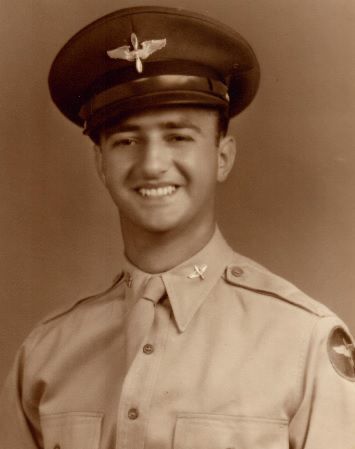
Volunteering to serve in the Army Air Corps, Chris quickly advanced to flight school where he was commissioned an officer and at 23 years old, commanded a nine man crew as he piloted a B-24 bomber in the European theater.

He flew combat missions until Germany’s surrender and his 36 combat missions exceeded the 32 mission requirement making him eligible to return to the U.S. for non combat duty. To put this in context consider that by his volunteering to fly more combat missions, he was aware that within the 8th Air Force Bomb Group he was part of there was about a 25% fatality rate on the bomber missions being flown in that time period.

Awarded the Distinguished Flying Cross and seven other medals recognizing his extraordinary valor and combat record, Chris continued his military service in the Air Force Reserves, retiring as Lt. Colonel in 1972.

At the close of WWII he returned to Auburn NY where he married his hometown sweetheart Clementine “Dutch” Boglione for a union lasting 62 years until her passing in 2010.
In 1946 he obtained his commercial pilot’s license but declined an offer to fly for American Airlines to instead begin building the Auburn Foundry company – which he ran as co-owner and President until his retirement in 2006. The business remains one of Upstate’s last independent foundries – a testament to the strong foundation and team he built.

Putting others ahead of self

Given his war record, extended military service and success as a local businessman, accolades from those exploits alone would be a full life for many. But for Chris, life wasn’t about achievement as much as it was making a difference for others in ways that might not garner recognition, but truly had an impact.
He volunteered across a whole range of organizations like Knights of Columbus, Kiwanis, his local golf club and others. Chris successfully led an effort to engage an entire neighborhood of lakeside residents to pool their resources for creating a paved county road and bring in sewer and water to the area – something that would not have happened without a collective citizen coalition such as he put together.

Beyond being active as a leader who got things done, it was Chris’s persona of easy going, rock solid integrity and always sensitive to the feelings and situation of others that endeared him to all he met.

He lived a Christian life doing things that made a difference in the lives of others, including for disadvantaged people on the margins of society. Appreciated by his community, he more than deserved the reputation of being a soft spoken, low-key hero.

Role model for the next generations

Chris was a hero to me and someone I appreciated from the first day we met 40 years ago.

As I matured, I also grew in my understanding of how the role model he was influenced his daughter Krista in ways that both attracted me to her and set the foundation for own marriage.
So as our children were in elementary school in California, and we thought hard about our priorities in their upbringing, uprooting from Silicon Valley in 1999 to come home was very much based in having our kids take advantage of the special grandparents they had.

These last 17 years with him have been more than special. As saddened as we are to no longer have him with us, we’ll forever cherish both the memories of our time together and how lucky we were to have him be such an influence in shaping our lives.

The example he set in living a truly full and impactful life inspires me, our family and the lives of others he touched. His legacy lives on and will never be forgotten.

“Those we love can never be more than a thought apart, for as long as there is memory, they’ll live on in the heart.”


Discovering Self Inside a Super Maximum Security Prison

Pelican Bay Supermax Prison. I’m locking eyes with Gary, separated by a perforated metal screen as zero physical contact is permitted with residents of the Secure Housing Unit (SHU), the prison’s solitary confinement facility.

While I’m aware Gary has been “inside” for more than 15 years, I’ve no inclination to ask about his reasons for being here.

Instead, we’re focused on an exchange guided by Defy Ventures CEO Catherine Hoke as I’m part of a team of 20 volunteers who are all facing individual SHU residents and now engaged in a series of interactions advancing each resident’s ambition to change their life by taking advantage of Defy’s highly refined program featuring guided personal development with many check points for accountability along the way.

The warden tells us it is the first time a group exercise has ever been done at Pelican Bay SHU, as no organization has ever ventured in with a track record to suggest having an impact on this segment of residents who are as isolated from society as you could possibly find.

Defy Ventures is a seven year old non-profit committed to reducing America’s recidivism rate. More than two-thirds of those released from prison, returned to incarceration within 5 years.

This mind blowing rate of returning people to prison is just one of the forces propelling the U.S. to hold 25% of the total prison population of the planet, even though we have less than 5% of the global population.

While other forces like lack of opportunity in disadvantaged areas, broken families, substance abuse, underperforming public education, electoral politics and inherent bias in the criminal justice system all have layers of contributing factors that go beyond the scope of this post, no one would disagree that a primary goal of our prison system should be to rehabilitate the incarcerated so those released can be productive in society and break the cycle of criminal behavior that too often continues into succeeding generations.

Not surprisingly, as employers are reticent to hire released felons, a parolees’ lack of opportunity to progress in society erodes hope and triggers gravitational pull back to the relationships and environment, which too often leads to a subsequent criminal act.

Defy’s approach to addressing this seemingly unsolvable problem is to help both prison inmates and recently paroled join on a committed path as Entrepreneurs-In-Training (EITs) – enabled by a combination of tightly structured self development and hands on help from a cast of highly accomplished volunteers.

The results of this program are nothing short of astounding. Of the 2,000 Defy graduates, 166 businesses have been created, spawning 350 new jobs for people with criminal histories.

Defy has had only 3.2% of their graduates return to prison. When you consider the cost of incarceration in California is $70,202 per year per inmate and an investment in an in-prison Defy EIT is $500, that results in a 294x SROI for California’s taxpayers.

But the win is far more than dollars saved as the real victory is putting individual lives on a productive path, breaking a cycle of returning to criminal behavior and bringing positive effect on lives surrounding the EIT like their family, friends and others seeking to break away from criminal behavior.

Everyone Invited, Only the Committed Advance

Being an entrepreneur is an alluring path for many, especially people with a limited range of options available to them. But only the committed will thrive as the failure rate for small business is often cited at 80% within the first five years.

Defy has evolved their entrepreneur development program so that it combines online and in-person exercises requiring an EIT’s sustained commitment to advance towards graduation.

Parolees access Defy’s online learning modules over the web and because, inside prison this is typically not an option, Defy’s video based learning can be accessed on the prison’s TV network.

At each phase of development, EITs are given assessment exercises that are tracked for completion through Defy’s Learning Management System.

In both “inside” programs and those on parole, EITs form support groups where they are helping each other stay on track, forming relationships with those who share a common ambition of finding success through entrepreneurship and strengthening commitment to avoid returning to a criminal life.

Mutual Respect Begins With Shared Understanding

As EITs progress in their development, they are offered opportunities to participate in high impact personal interactions with a very impressive group of experienced entrepreneurs, executives and investor volunteers.

Through a series of interactive exercises, volunteers and EITs come to know each other and learn about each other’s lives in ways that highlight their differences and similarities. In one exercise, separate lines of volunteers and EITs face each other, then step to a center line acknowledging how environment, family and impact of selected circumstances played out with either fortuitous or unfortunate outcomes now determining their status as an EIT or professional volunteer.

It is the similarities more so than the differences that are striking for me.

Like most volunteers, it is a huge “aha” moment to wrap my head around the realization that, with just a minor twist in my own life circumstances, it could easily have been me standing in the EIT line or see EITs with the clear potential to have ended up on the volunteer line as successful professionals.

That shared understanding of each other’s position begins the process of building mutual respect that in turn powers advancement of both EITs and volunteers in our respective journeys.

For in-prison events, volunteers provide coaching to EITs on topics that include articulating their personal elevator pitch, resume feedback, mentoring on the business idea the EIT is developing and participating in pitch competitions.

Volunteer support for those who are released include those activities as well as supporting and tracking an EIT’s progress and linking EITs to resources that can help their business succeed.

In all situations, EIT contact with volunteers follows a strict protocol managed by Defy in a way that preserves privacy and security considerations.

A Different Kind of Volunteer Impact

Since I was already deeply engaged in helping lots of first time entrepreneurs, the fit for me to check out Defy was pretty easy. While the audience was different than the startup world I am typically engaged in, the activities seemed right within my wheelhouse.

My expectation before volunteering was that my ability to have impact would be based on my knowledge, entrepreneurial experience and relationships I could bring to the program.

But beginning with my first event, the nature of my interactions with EITs were in such sharp contrast with the traditional world of helping startups I began to understand this was less about my professional qualifications than it was an opportunity to grow by being vulnerable and giving without expectation of return.

You see in the traditional startup-coaching scenario we don’t spend much time showing personal vulnerability. We go right to diving in with the help and expertise we think we’re there to give.

And even if we tell ourselves we have a “pay it forward” mindset, we know the startup world has so many interconnected relationships there are paths where our volunteer contributions may come back in some form of unexpected reciprocity – be it new deal flow, a helpful entrepreneur or investor contact, or referral to a highly valued source that can help us.

Defy Interactions Can Be Transformational

The Defy personal interactions are humbling in their effect of acknowledging vulnerability and rethinking about forces that led to how I arrived at the stage of my life where I can qualify as a Defy volunteer.

And when there is zero expectation of reciprocity, it forces the commitment choice on what my real reason for volunteering is – am I sincere enough in my values to walk the talk of pay it forward, or not?

Locking eyes with Gary and continuing our discussion through the perforated metal screen brought home that realization on how any impact I was having wasn’t about my professional experience, but instead my ability to show understanding, compassion and commitment to someone otherwise cut off from society.

I’m thinking that after our exercise concluded, Gary replayed the interaction in his mind as many times as I have. For different reasons, perhaps we both came away feeling we grew as a result.

So my own success measure for Defy volunteer participation is now flipped from where I was at the outset.

These powerful in-person interactions have done much to alter my personal outlook in a transformational way – something that I simply don’t get in the traditional role of mentoring startups headed by people that have already been dealt a pretty good hand.

But that benefit of a transformational outlook comes only as a result of participating with Defy in person.

It’s alluring enough to keep me coming back for more, and is probably the underlying force behind Defy’s high rate of returning volunteers – which is the only kind recidivism you really want to see!


Crossing Boundaries to Build Startup Community

A delegation of a dozen business and professional community leaders from Binghamton took a day out of their already busy schedules to travel to Syracuse. They toured assets in the Syracuse startup community, and interacted with local leaders to learn from their experiences in building startup community.

The delegation included people from Binghamton Chamber of Commerce, City government, Binghamton University and local business leaders. These people are committed leaders with a stake in growing Binghamton’s startup community. They understood the value of getting an inside look at steps a neighboring city went through to build momentum around creating companies and jobs in newer industries. These efforts are now attracting top talent to a revitalized downtown area, and certainly worth paying attention to.

Journeys begin with vision

CenterState CEO’s Rob Simpson welcomed the delegation and provided an overview of some initiatives that started a decade ago. This ingenuity included critical public private partnerships, which set the stage for today’s job creating thrust.

A tour of the Syracuse Technology Garden, undisputed hub of Syracuse’s tech community, featured a recap of programs and entrepreneur supporting activities. Rick Clonan presented, and had John Liddy, Founder and Director of the Syracuse Student Sandbox sharing insights on how the college student accelerator engaged local mentors that were critical to graduating students deciding to put their roots down in Syracuse instead of going elsewhere to start their first company.

The delegation toured the new Syracuse Marriott Downtown (a project CenterState CEO helped lead), and enjoyed a luncheon discussion with Marc Viggiano, a retired business executive who shared his personal experience on how becoming involved with the Seed Capital Fund of CNY, StartFast Venture Accelerator, Genius NY program and Upstate Venture Connect all lead to helping entrepreneurs start companies and create jobs.

Entrepreneurs revitalizing downtown

A tour of Syracuse CoWorks, a nationally prominent co-working/living space, provided an inspiring look at how downtown space can be configured to foster relationships that attracts both millennial entrepreneurs and residents. The “community” also serves as a base for StartFast Code – a coding academy that puts individuals on a career path as professional web developers or helping advance their existing businesses.

Final stop was SpinCar, graduate of StartFast 2013 cohort and now a blossoming company with 40+ employees headquartered in Syracuse. Co-founder Mike Quigley shared the SpinCar story, including how the community helped his team on the path to success. This included connections to key people and resources of which Mike says made all the difference in SpinCar getting to the right customer market, finding investors and talent.

We closed the day with an engaging discussion around elements of a strong startup community. This long-term outlook and willingness to cross geographic and institutional boundaries relies on people working in concert. The result is connecting entrepreneurs to the resources needed to grow companies and create high-paying jobs.

True leaders break new ground

Five or more years ago, we could not have seen a delegation from one of our Upstate cities traveling to another community to learn about building a startup ecosystem like this. Not only would best practices have been harder to identify, but the interest to travel and learn from others just wasn’t getting any traction.

Over the last year, I’ve spent a lot of time in Binghamton and I’m impressed with the seeds of change that have clearly been planted. There is no doubt that this group of leaders, who are crossing boundaries are leading the way in accelerating change. Working together, we’ll have a meaningful impact in growing companies and creating jobs in Binghamton’s future economy.


Road Trip: Spending time with those we love


I just completed a drive home to Little Falls, New York originating from the San Francisco Bay Area.

With a few zigs and zags, it was about 3300 miles over 8 days.

This was my 9th cross country road trip, but the first with my son Jared since 1999 when our entire family relocated from Silicon Valley to my Upstate hometown by way of a 2 week cruise in an RV. He was then 6 years old so memories were a bit sketchy for him about that experience.

Now as a young man with an experienced traveler’s curious eye, Jared’s interest in a road trip evoked a positive reaction as soon as I brought up the idea.

While the ostensible reason was to transport a car we had in California to our home in Little Falls, I didn’t hide my interest in both the road trip experience and our spending some quality time together.

Because of winter weather risk traversing the Rockies this time of year, we took a southern route heading east along Interstate 40 and the old U.S. Route 66.

Desert and high plains from Las Vegas to Santa Fe were particularly scenic, and we veered off for side stops sometimes on a whim – like after seeing roadside billboards for the Billy the Kid Museum in Fort Sumner, New Mexico.

In comparison with cross country trips I did a decade or longer ago, I was struck this time by how much easier it is now with so many enhancements in the richness and ease of accessing information while on the fly.

We began the drive with no more planning than a general idea of the route and then made it up as we went along each day.

Google map features making it easy to pick up interesting attractions and stops along the route added to the process of discovery – so there was no difficulty in figuring out options we wouldn’t be experiencing back home, including dining in memorable settings like The Big Texan in Amarillo.

In picking the route we also stopped by to see a few friends, each of who had something to add to Jared’s experience. Our most memorable being time with my personal hero and mentor Jack Stack as we re-connected with him for the first time in about a decade.

The highlight for me though was the time Jared and I spent being together without distraction of outside influences. Sharing our observations, perspectives and thoughts in a relaxed way without the pressure of the next deadline or meeting.

We know that the convenience and relatively low cost of commercial air travel combine to put a big dent in long distance family road trips.

The wider range of leisure options we can easily find also builds a subtle time pressure to pack as much as we can into any time off period, perhaps sometimes with a feeling of being ready to tell others about where we’ve been over vacation.

Call me old fashioned, but I still like the road trip as a choice on the week or longer vacation menu. There is so much diversity in scenic beauty, attractions and culture right here in the U.S. Sharing with those we love is an experience best savored without tight timelines driven by flight schedule and limited time in a single location.

I’m a lucky guy to have a 23 year old son that shares that interest and still travels with his Dad. We made some memories together that will be with us always – and that’s what leisure time in our family is all about.


Returning From My Foray Into Politics

It’s almost a fist to the head kind of moment to realize I haven’t put a personal blog post up on this site since February last year.

Those that have regular contact with me know the story, but I suspect there are others on my distribution that weren’t aware of how my 2016 evaporated with my entire focus for the year spent pursuing a bid for U.S. Congress in New York’s 22nd District.

Adding to the improbability of the story was my choice to run as a third party candidate – seeking to buck the odds since no one has successfully done that in the last 5,000+ congressional elections since Bernie Sanders in 1990.

But then, entrepreneurs aren’t afraid to pursue the improbable and the entire effort was centered around my message of spurring job creation through the very things I’ve learned in my journey of starting and growing non profit Upstate Venture Connect these last seven years. Our mission there is to build scalable pathways connecting first time entrepreneurs to the resources needed to grow companies in new, fast growth industries. We are pushing Upstate NY’s economy in the direction that not only leverages our assets, but can actually succeed through private sector rather than government driven programs.

While I did not win the election, I’ve absolutely no regret for having run the gauntlet of a difficult, and sometimes vicious campaign fight that was an immersive and total learning experience from beginning to end.

Even though there is a most interesting backstory on how major parties and related special interests rig the system to stymie independents from advancing, I won’t be blogging much with retrospective campaign reflections or commenting on the dismal state of our political affairs.

Those people interested are welcome to browse through the Babinec For Congress site and if suffering insomnia, might watch one or more of our short documentary videos on Running Independent.

But I will share that the big motivator for me to run as an independent was realizing how the quirk in NY State’s election law permitting fusion voting actually gives minor parties a terrific opportunity to influence the political discourse by attracting major party candidates to co-list on the minor party lines.

So my personal quest in advancing the Upstate Jobs Party will continue and I do expect to put some posts up that share some of what I learned from my foray into the political world – including how entrepreneurs and others who care about job creation can make a difference at influencing a broader community without resorting to the quagmire of seeking change through public policy.

And since I’ve now re-engaged in growing Upstate Venture Connect and resumed investing and mentoring more startup entrepreneurs, you can expect to see more posts on these topics as well.

Looking forward to diving back in and hope to see comments and feedback as we re-energize building community.

It’s good to be back.


CatskillsConf: Fun mashup helps build startup community

Just came off a very fun and worthwhile weekend at the inaugural CatskillsConf – a three day affair that brought together an eclectic mix of creatives, tech people, foodies and startup community supporters.

Was cool not only because the organizers were able to successfully pull off marketing to assemble 120+ people that touched on all those themes, but the diversity included an audience nearly evenly split between Upstate and NY metro.

This was the first ever such gathering in the Hudson Valley/Catskills area. It came about after founders of the Hudson Valley Tech Meetup (Dan Stone, Daniel and Sabrina Shutzsmith and Kale Kaposhilin) met Aaron Quint, (web entrepreneur and former Paperless Post CTO/Chief Scientist) who recently transplanted from NYC to the Hudson Valley.

Pooling their combined organizational talents, passion for bringing people together and lists of contacts is what catalyzed CatskillsConf and their joint marketing outreach filled the room.

Leveraging Local Assets

Whether it was musical talent, farm to table culinary, wood crafts and natural settings of the Ashokan Center, this was a thoughtful mashup that brought diverse elements together with common themes that spoke to the millennial target.

On the learning side, my personal favorites were Dennis Crowley’s “put it all out there” story reflecting struggles at different stages in the startup journey, and also an amazing education segment featuring live birds of prey doing their thing.

birds of prey

When you’ve got a group together for more than a day, it gives opportunity to go beyond a large group learning setting to do some things that can be hands on, fun and social – all adding to the potential of building on strong relationships among participants.

The Catskills flavor for small group activities included options like foraging, blacksmithing, cider making, bookbinding, and drone piloting to name just a few.

Institutional ownership not a requirement for success

More than just a well run event, what’s unusual here is that the outcome wasn’t oriented towards benefiting a particular organization – but rather to just grow the relationship networks for participants, while having a fun time and creating many memories.

My boomer generation just isn’t used to seeing grass roots organizing like this without institutional ownership and resources.

New relationships will yield downstream benefit

As I browsed around, a frequent comment from local tech people sounded like “I used to think I was the only person around here like me. As a result of the groups forming and events bringing like minded people together, I’ve now got a growing network of supporters to help me.”

As I try to calculate the number of “creative collisions” that occurred and what happens when like minded people stumble into each other for the first time, there is little doubt that startup formation and growth will include some life changing outcomes sparked by what seemed like chance encounters.

Good things happen when a few people step up to lead

Kudos to the organizers as they took financial risk and put in a ton of hours along with a full supporting team of volunteers.

They set an inspiring standard for others to follow and their leadership adds further fuel to my optimism about why it is the millennials who are making the difference in powering Upstate towards a big jump in the number of new industry companies and jobs that will rise here from humble beginnings as people meeting at an event that then lead to collaborating on a startup.

We pledge our resources at Upstate Venture Connect to support their efforts and look forward to doing the same for all others ready to lead the charge in their own local market.


Recognizing Startup Community Builders

With a twist on the traditional “Entrepreneur of the Year” awards celebration, Upstate Venture Connect has partnered with Upstate Venture Association of NY to do our first ever celebration to recognize people who are making a difference in building our burgeoning startup ecosystem across the Upstate region.

Entrepreneur leaders make things happen by powering the launch and growth of activities and initiatives ranging from Startup Weekends, angel investor funds, accelerator programs, tech meetups and hackathons to name just a few from the diverse range we already see here in Upstate NY.

Who comes to mind in your community that is out front and leading with their actions to help startup entrepreneurs launch and grow companies?

You can nominate them here for one or more categories in our Venture Ecosystem Awards.

All too often, startup community leaders are people motivated by no more than wanting to leverage their time and talent to make things happen. Our goals include putting the spotlight on those making a difference as well as sharing examples that will motivate others to step up and lead.

Don’t delay as nominations close Monday August 31. The nomination format is easy – if you know someone making a difference they will be in good company.

Sign up yourself to attend our October 9th celebration luncheon at Turningstone Resort in Vernon. We anticipate a turnout of 2-300 people who are leaders and supporters from throughout the Upstate startup ecosystem.

Join us in the fun and show support for those that are building Upstate’s startup economy.

See you there!