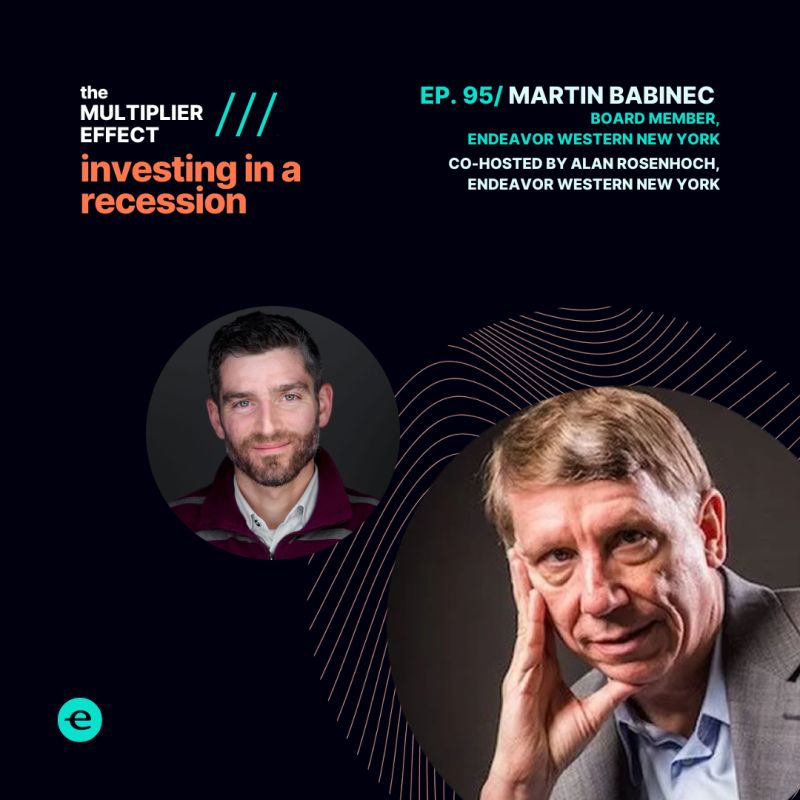
The Days of Cheap Money Are Over

Colleagues at Endeavor hosted me for a podcast to talk about investing and operating venture backed companies during recessionary times.

Endeavor entrepreneurs and many others are experiencing the effect of high interest rates and depressed public company multiples as investor backed companies start testing the market to raise their next round of funding.

With Endeavor’s audience focused primarily on companies already in growth stage, they were specifically interested in speaking with people who had experienced multiple recessions.

Three Prior Tech Wrecking Recessions

For me, there were three distinct pullbacks driving venture investors to run for cover. Each followed a frothy VC investment period with new heights in valuations immediately preceding these resets:

  • 2000 – 2002 Dot com bust + post Sept 11 recession
  • 2008 – 2009 Real estate and financial markets crisis
  • 2020 – 2021 Initial 18+ months of Covid pandemic

I’m far from unique for having worked through each of these resets. The first two I was on the operating side of the business as CEO and Chairman at TriNet, while during the 2020 venture pullback I was on the investor side doing what I could to help UpVentures portfolio companies make hard decisions following the unexpected falling off the cliff valuation drops at the start of Covid.

Have a listen to the podcast if you’re interested in hearing more about what prompts me to think it may be a couple of years or longer before we get back to late 2021 private company valuations.

Recessions teach us that failing to recognize macro forces beyond our control can too easily result in horrific consequences to once promising companies. Much heartache can be avoided if leaders move quickly to face reality in making the hard decisions.

Whether you’re an operator or investor, if you believe “only the paranoid survive,” it’s necessary to look beyond founder optimism thinking that past momentum points towards everything just working itself out.

Got 3 Minutes? Listen to one segment

Open up the podcast here and jump to a specific topic of interest by advancing to any of the following time stamps in the podcast:

> 1:55: How is the economic outlook different today compared to a year ago? Where’s it going for VC backed companies and how long will the recession last?

> 4:00: Why public market valuations are going down and how that affects private companies seeking funding.

> 7:42: How does the current economic cycle compare to the dot-com bust of 2000/2001 as well as the 2008/2009 recession.

> 9:41: Insights from leading a company during recessionary times, including TriNet’s aborted IPO during the 2000 “dot bomb” downdraft

> 13:33: Why running a company during a recession requires Wartime Leadership that accepts macro reality, making the hard decisions and figuring out how to keep the right people you want in foxhole with you when you’re under fire

> 19:40: What investors can do to support management in making hard decisions. How management leverages data to support, track and adjust a realistic financial plan

> 22:48: Why it’s a great time to be an entrepreneur, including outside major tech hubs

> 24:31: Connecting entrepreneurs to resources is a common social impact thread across UpVentures Capital, and non profits Upstate Venture Connect, Entrepreneurs Across Borders and UpMobility Foundation

> 27:49: “Call me crazy” moment: Running as an independent candidate for U.S. Congress in 2016 and how that evolved to a committed journey inside a national movement to improve democratic processes in New York and the United States

> 29:35: Most Inspirational CEO: Jack Stack + how the Great Game of Business shaped TriNet’s trajectory

> 31:10: Best Business Advice Ever Received: From Mitch Kertzman – Not getting hung up on founder’s percentage ownership of the company

SVB Collapse a New Risk Factor

Since the podcast was recorded prior to Silicon Valley Bank’s demise, ripple effects from that closure are still unfolding. Certainly, that includes investor discovery of a new financial risk factor for the venture ecosystem further depresses valuations beyond the other recessionary factors described in the podcast.

Endeavor Helps Scale Ups

Endeavor is a non-profit leading global community of, by, and for high impact entrepreneurs.  I joined their Western NY Board of Directors last year as part of my mission in connecting high growth founders to resources they need to scale companies. Endeavor is a truly global, mature non-profit built on a Pay-it-forward ethos such as I’ve described in More Good Jobs. The Endeavor board role is helping me see best practices I hope to carry over to other non-profits I’m involved with building community like Upstate Venture Connect, Entrepreneurs Across Borders and the Seasoned Entrepreneurs Gathering Exchange.

Related posts:

Wartime Leadership Series

More Good Jobs Series


New Chapters for 2023

December 31, 2022 sunset viewed from White Street Pier, Key West

Catching a beautiful end of the year ocean sunset with my family triggered thoughts about what I would take from the year just finished. Some of those reflections were already kicking in with the first dawn of the new year.

2022 had its mix of ups and downs

Russia’s invasion of Ukraine early in the year got my attention in a big way. Many visits in prior years to my ancestral homeland of neighboring Slovakia stoked awareness and concerns – including memories from the 80’s while visiting family under Soviet subjugation. It doesn’t get grimmer than war, but Putin is only part of the alarming trend of autocracy filling voids created by failures to evolve democratic institutions.

Closer to home, the biggest chunk of my energy last year was devoted to non-partisan Unite NY seeking to build support for reforming democratic processes in New York State. This included work aimed at establishing a state wide minor party ballot line and helping candidates for office aligned with our agenda. Notwithstanding a consuming effort, our approach failed to produce results we set out to achieve in the 2022 election cycle.

While I remain a large shareholder, retiring from the board of directors in May ended my tenure with roles at TriNet. At one level, it was hard to step away from being involved in the company Krista and I began 34 years ago. A journey rich with experience and relationships impacting my family and many others who’ve worked hard building a company to last. But the timing was right, and I have complete confidence in both management and our board to move on while achieving what should be every entrepreneur’s goal to work myself out of a job!

For 23 – Continue building, but with some new twists

Watching the sun rise on January 1 brought deep gratitude for the many lucky breaks I’ve been fortunate to receive, as well as optimism for what’s ahead in this new year.

Good health and a loving family are foundations I will never take for granted.

Teams growing around me are getting increasingly capable of driving progress across our social impact and community ventures. This helps transition me towards being more strategic and governance oriented while still having fun finding and engaging with new people who can help us.

With intentions to steer clear from any perceptions of partisanship, we decided that Unite NY will now drop all involvement in supporting candidates. We’re focused exclusively on building voter awareness and engagement to address systemic issues driving political dysfunction. In addition to independent polling, expanded media coverage and growing member development, we’ll be advancing our partnerships with state and national organizations similarly aimed at pragmatic solutions providing incentives for officials to put voters ahead of party interests.

Entrepreneurs Across Borders will be my primary focus in 2023. While our pilot in Jamaica was hampered by Covid restrictions since early 2020, we’re now progressing to show we can scale up connecting entrepreneurs in underdeveloped countries to resources within our network of in country and U.S. based seasoned entrepreneurs.  A week long visit in December opened up many new doors with high impact relationships enthused about joining the effort. My joining the Endeavor WNY board also jumpstarted insights on best practices to aspire to. Combined with an expanded team, EAB is now in go mode for ramping up.

So let me know if either reforming democracy or alleviating poverty by helping entrepreneurs in underdeveloped markets might be social impact areas of interest to you. Both movements are still in nascent stages but have some footing to show the potential for impacting many lives.


Startup Boards: A Field Guide to Building and Leading an Effective Board of Directors

This post was prompted by Brad Feld’s release of the Startup Boards 2nd edition.  I’ve been sharing the original since it was published 10 years ago, frequently shipping a copy to founders when I closed on a seed to Series A investment.   This 2nd edition is packed with new content I find useful for not only startup founders, but also seasoned CEOs ready to do a gut check comparing their board with the book’s suggested best practices.

Learning about boards is an overlooked founder priority

For most founders, the onset of bringing on institutional investors triggers awareness of governance and responsibilities of a board. Though even at that stage, I’ve found it’s a rare early stage entrepreneur that grasps the priority of investing the necessary time and energy for learning how to build and manage a board of directors.

More typically, first time founders look to their venture investors for guidance on board composition, development and process – without realizing that the entrepreneur’s following rather than leading, is a huge missed opportunity to develop critical competency necessary to evolve as CEO through and beyond the growth stage of their company.

Once investor backed company CEOs start being held accountable to hitting growth targets, a founder’s narrowing focus to revenue and customer traction can drive attention further inward, coming at the expense of proper expectation setting and engagement at the board level.  Not surprisingly, many founder departures happen when the company hits inevitable speed bumps in the growth stage, where the mix of managing both above and below is new territory for the entrepreneur CEO.

Startup Boards as a Field Guide

The book is a truly a field guide that founders may read through once, then find themselves going back for reference when board issues start rising to top of mind.

Understanding the basics of a board’s purpose, roles and functions lays the foundation for those just beginning their board journey.

A full chapter on VCs as board members demystifies several dynamics that can help immensely in forging productive VC Board member relationships.

Seeing best practices on how to recruit, interview, compensate and communicate with board members are all key, as is the understanding of why having a blend of independent directors is so critical.

With 34 years on TriNet’s board, seeing the arc of that evolution through challenging growth stages, (including rigors of the public market), gives me special appreciation for how the guidance in this book is spot on.

Buy it now and you’ll have the chance to take more control over your future by seeing the connection between good governance and successful companies.


Scoring Tech Talent – Upstate NY is Rising

hand holding lightbulb

Just finished my first scan of CBRE’s insightful report with a U.S. wide look at the talent trends inside the top tech markets.

Several themes seem to track closely to what we found in our research for Chapters 1 and 2 of More Good Jobs. While CBRE researchers didn’t use MGJ measures of Retainment and Magnet Quotients, their methodology tracks to similar outcomes we targeted in our research for the book.

Since my emerging tech community building efforts are furthest along across the Upstate NY region, I’ve listed below a few observations that caught my attention. To see the charts and tables for these citations, download the report so you can go directly to the listed page number.

  • p11 and Appendix pA48 Rochester Ranks Nationally – With a strong increase in the number of locally produced STEM degreed graduates, Rochester listed as #47 of top 50 Tech Talent markets in the U.S. Page 44 shows Rochester also doing well in the category of Underrepresented Race/Ethnic Groups in U.S. Tech Talent Workforce.
  • p58 Tech Quality vs. Cost Analysis: Rochester is on the edge of moving into the “High Quality” labor market segment for tech talent – while still maintaining the lowest cost structure of any of the top 50 tech talent metro markets in the U.S. This finding is not only a marketing opportunity for Rochester, but perhaps a metric we might focus on developing for comparison across all our region’s metro areas.
  • p68 North America’s Next 25: Here CBRE researchers ranked smaller labor markets with the most promising trends in growing both tech jobs and rising wages. Albany ranked #6 and Buffalo ranked #17.

Taken as a whole, this research with a national comparison across markets shows three of Upstate New York’s metro areas recognized as trending in the right direction producing tech jobs with rising wages at a rate that is accelerating over peer communities with similar demographics.

Results come from playing the long game to build connected communities

When Nasir Ali and I launched non-profit Upstate Venture Connect in 2010, the Upstate NY emerging tech landscape was so much less developed than it is today.

It’s been a long and committed effort to keep grinding with experiments for scaling solutions across the region to help connect founders to resources they need to start and grow innovation economy companies.

Even as New York State struggles with a broken political system that further propels outmigration, I find this CBRE report to be a bit of validation from an independent source that helps bring visibility on the progress being made.

While there’s much yet to be done, the news puts more fuel back in the tank to keep growing the movement our UVC community (now 15,000+ strong) has contributed to developing as a regional network over the last decade.


The System Is Rigged…But It Doesn’t Have To Be

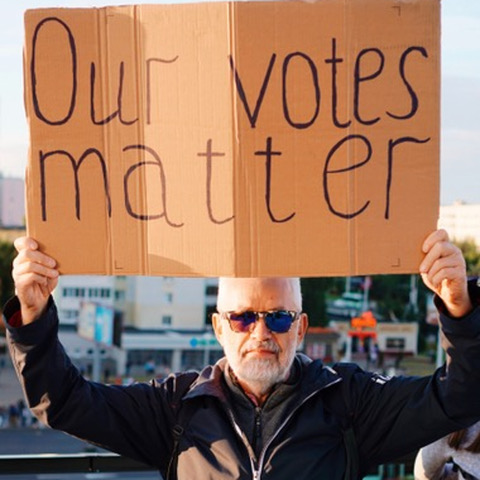
I recently had the opportunity to join Keeler in the Morning for a lively discussion on the problems posed by party primaries in New York and the benefits to opening up the political process to allow unaffiliated voters to participate.  I advocated opening up the primary process, as is done in 41 other states, could help shift power away from party bosses and to the voters – particularly the 3.5 million New Yorkers not affiliated with a party.

Bill and I disagreed on air about the likely impact of an open primary process, and he followed up with an online post summarizing his views. While I always enjoy my interactions with Bill, his piece made a few assertions with which I don’t agree, so will take this opportunity to provide some clarification.

The reason for open primaries is a simple one – the state’s gerrymandered districts set up elections that will predictably be won by the party who holds the “safe seat.” This means that too often, the primary election is the de facto election.  Consider that less than 30 percent of general elections for state Legislature are competitive in New York state, meaning 7 out of every 10 representatives gets to office by being chosen by a party boss or simply winning a primary – elections that exclude those 3.5 million, and growing, independent New York voters.

Who runs in primary elections? Candidates that are typically hand-picked by party bosses with the greatest likelihood of winning in a low turnout primary – which is increasingly tilted towards candidates representing extreme positions within the Democratic or Republican parties. What does this lead to? Elected representatives selected by an extremely small part of the actual electorate.

I saw this myself when I ran for Congress as an independent candidate.  One of my learnings from that experience is that while the broken system needs fixing, the politics industry has no incentive to make the needed changes since the existing structure works to the benefit of those already in power- especially the two major parties.

Despite what some have suggested, I will not be a candidate again as I’m better suited to bring about change through the more difficult route of helping catalyze a reform movement from the bottom up such as we are seeking to do with Unite NY.

The Numbers Tell The Story

Make no mistake about it, turnout in primary elections is abysmal. One recent example is in Albany – our State Capital with nearly 100,000 voters. The incumbent mayor won her primary election this year with fewer than 4,000 votes. Sadly, this is the rule, not the exception. The reason people have checked out is simple – voters are smart and they don’t want to participate in a rigged game.

Contrary to what Bill had in his post, in New York the only parties still having statewide ballot access are Democrats, Republicans, Conservative and Working Families – a drop from nine parties recognized at the start of 2020.

According to the National Council of State Legislatures, there are 41 other US states with some form of an open primary process. We at Unite NY are not advocating for opening the primary process up to allow people enrolled in one political party to participate in the opposing party’s primary. Rather, we want unaffiliated voters (not enrolled in a party/independent), to choose the primary in which they want to participate.

The need to make this change is great, as there are currently more unaffiliated voters than there are people enrolled in the Republican, Conservative, and Working Families parties combined.

And not only is the need great, but it is popular as well. A recent poll done by acclaimed independent pollster John Zogby found voters overwhelmingly support political reform, including open primaries, with two thirds of those responding saying open primaries will bring needed change to the state’s political system and three in four voters (76%) agreeing that “open primaries should allow independent voters to have a say in which candidates advance to the general election.”

Closed Primaries Kill Moderate Candidates

The week after announcing the poll results, John appeared on the Keeler Show sharing commentary on voter attitudes about electoral reform, including open primary. I’m quite glad Bill asked John to join him on the show to discuss something he doesn’t agree with – too few folks these days are interested in a discussion on a topic they don’t support.

In the interview and blog post, Bill cites Ben Walsh winning the mayoralty in Syracuse as an independent and Byron Brown’s win in as Mayor of Buffalo as a write in candidate as reasons why we don’t need open primaries – but I’d draw a completely different conclusion from the same facts.

Our Unite NY organization and its forerunner supported Walsh twice, and the effort it took for his team to win election and reelection were monumental. The hurdles he was forced to endure, whether it was the petitioning process to get on the ballot, or the challenges to coalesce support and build winning campaigns, were far greater than those with entrenched party support. But he ran as an independent because he knew a true moderate candidate had dismal prospects for success in surviving the low voter turnout in either of the two major party primaries.

Likewise, Mayor Brown was forced to mount a write-in campaign after losing in a lightly attended primary because ballot access on an independent line is near impossible these days. Brown’s pragmatic positions resonated with the general electorate, but not the fringes who showed up in his party’s primary election.

We need more Ben Walsh’s and Byron Brown’s because they represent the same interests as the majority of the electorate by placing People over Party – an identity general election voters resonate with but simply doesn’t line up to win in the hyper partisan closed primary process we have in NYS.

Let’s open primaries and welcome people, not party bosses and political extremists, as the winning path to get the best candidates on the general election ballot.


No – I am not going to be a candidate for public office

What is his motive? Why is he doing that?

These thoughts often come to mind as we interact with someone we don’t know well, perhaps trying to process how their actions or words fit into a grander scheme.  We are, after all, naturally skeptical mammals.

I am typically on the receiving end of people guessing, incorrectly, about the motives behind my activities, particularly as they relate to advocating for political reform or public policy.

Running as an independent candidate for New York’s 22nd Congressional District in 2016 certainly seemed out of character from my background as a high growth Silicon Valley entrepreneur and active startup investor. Campaigning on a jobs and education platform, this was less a surprise to those closer to me who were aware of my efforts in catalyzing a regional ecosystem through non profit Upstate Venture Connect.

That independent candidacy, however improbable, was indeed the perspective-shaping experience I knew it would be.  Like most of my ventures, I learned and I grew. The experience sharpened my focus on how I could help my community.  Even though I had previously dabbled in public policy advocacy, putting myself into the ring against both major parties in a hotly contested Federal election gave me insights I could never have gleaned from the outside looking in.

My big take-aways were not only how rigged the political system is in favor of candidates inside the 2 party duopoly, but also understanding conflict our elected officials face in seeking to make bold decisions that interfere with party interests.  Actions like these can often come with the potential risk of being “primaried” out of office by an extreme candidate (left or right) who caters to the rabid few voters turning out to vote in low turnout party primaries.

Playing the Long Game

Prior to my 2016 campaign, I had no awareness of New York’s unique fusion voting rules that permit a single candidate to gather votes on more than one line of the ballot. By being attractive to all candidates to list on as many lines as possible, this system actually gives minor parties more influence here than in many other states. That understanding was a key reason for my running as an independent, and in launching the Upstate Jobs Party with a long term goal of becoming ballot eligible state wide.

The initiative to grow UJP has steadily chugged along these last five years, cultivating one relationship at a time to join our insurgent movement that now focuses on bipartisanship policy making, election reform and yes – job creation policies that make sense in the real world.

While slow and steady across a mix of multiple initiatives has been my approach for the last decade, the January 6 insurrection was the game changer prompting me to now engage with a much larger chunk of my personal time and resources on this political reform path.

The fact that the insurrection occurred in the first place is a testament to just how broken the political system has become – and it shined a light on the reality that the entrenched powers have no incentive or means to bring about the needed changes or seek compromise between the two major parties.

Why engage?

While many say “There’s nothing we can do about it” – I’ve always been one of the crazy few that believe the most important change will come from the people, not from entrenched politicians.

This is hard stuff and requires steady, long term leadership commitment. That translates to building community, bringing people together behind shared goals of strengthening our economy and democracy.    We invest our energy not because of an economic interest, but because we’re passionate about making a difference in something bigger than ourselves.

Those are the kind of challenges that I am personally drawn to – I want to make a difference and leave this world a better place than I found it. It’s all the more motivating because I know so many others feel the same way about wanting to fix a broken system, but haven’t yet found that right path to be spurred into action and engaged.

As an entrepreneur, my talents are best put to that community organizing side seeking to play some small part in helping catalyze a movement still in nascent stages.

So there is no mystery to my motive. You can be assured I won’t be running for public office – but instead will continue my journey on this road less travelled, no matter how many say we can’t make a difference.

“Never doubt that a small group of thoughtful, committed citizens can change the world; indeed, it’s the only thing that ever has.”  – Margaret Mead


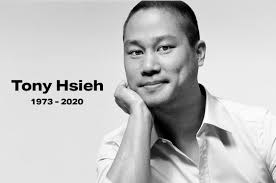
Tony Hsieh: Entrepreneur, Community Builder

Much coverage of Tony Hsieh’s legacy has been, deservedly, about his business success. After all, Tony’s incredible track record in leading Zappos has been hailed by corporate and leadership experts for creating a fanatical company culture passionately committed to teamwork and customer service in a way that powered sustained growth over his 21 year tenure as CEO.

Entrepreneurs everywhere revered Tony for staying true to his vision and values in how he did that. Notably, he was the only example we could point to as a super successful entrepreneur not being Amazon’d after being acquired by Jeff Bezos in 2009 for $1.2 billion.

But the story not being given much attention is how Tony’s vision and values pointed the company, and others, to join him in making a social impact with a private sector driven experiment for rebuilding the dead end Las Vegas neighborhood of Fremont East — resulting in a community movement he spawned known as the Downtown Project (DTP).

Zappos started in the Bay Area, but in 2004 moved headquarters to the Las Vegas suburban community of Henderson. The appeal for Zappos was driven by a lower cost structure to scale up the company’s primary teams of customer service, logistics and support workers needed to fill all those online orders.

As the company grew, employees spread across different buildings in a suburban business park and with even faster growth anticipated following Amazon’s acquisition, the forecasted needs for more space spurred planning for a corporate campus that would be supportive of the company’s quirky and purpose driven culture.

Instead of pursuing the conventional path of another suburban location, Tony chose to head into a decaying urban neighborhood believing that immersing his team on a mission of looking outward to build community around them would strengthen company culture and innovation, eventually leading to redefining Zappos company purpose as “Delivering Happiness” across their 4 C’s of Clothing, Customer Service, Culture, and Community.

Building Community

With that purpose in mind, as Tony explored urban Las Vegas he was struck by the long vacant and deteriorating former City Hall building and its surrounding neighborhood of Fremont East. So began the odyssey to bring about transformational change that his vision, and Zappos values, would drive to be a legacy extending far beyond the company itself.

How does one guy inject purpose, vision and values into a strategy for building community?

Following Zappos’ 2014 move into the awesomely renovated former City Hall building, Tony Hsieh described the strategy as being focused on scaling up efforts behind Downtown Project’s (DTP) own 3 C’s:

  • Collisions: Serendipity that happens when people being in the right place at the right time result in starting of a new relationship that blossoms into downstream impact
  • Co-learning: People in the community teaching each other — including mentoring and helping at a person to person level without necessarily a paid role
  • Connectedness: The number and depth of connected relationships in the neighborhood

With this strategy, Tony and DTP’s private investors invested $200 million in real estate, $50 million in small businesses, $50 million in education, and $50 million in tech startups. The impact today includes 407 ongoing or completed construction projects, 61 small business investments and an estimated 130,000 annual visitors for the Life is Beautiful Festival and DTP-related entities.

More than the numbers, it’s the impact on life in Fremont East that can best be experienced by actually visiting there and talking with residents, many of whom have had their lives change as a direct result of the transformational change DTP had on the community.

Inspiring example for others

I had only been an occasional visitor to Las Vegas, not paying attention to the community. But as a Silicon Valley entrepreneur who boomeranged back to my Upstate New York hometown, I was on my own community building journey helping others start and grow companies in the newer industries across the downtrodden Upstate NY region.

Ever on the prowl for following innovators with similar goals, I started tracking news on DTP — particularly Tony’s thinking behind how engineering conditions could get more of the right people bumping into each other resulting in “creative collisions” that would ultimately lead to meaningful relationships entrepreneurs needed to find resources like mentors, investors, team members and customers.

That experience mapped directly to my own startup history beginning in the late 80’s as a rookie entrepreneur with zero relationships in the tech community. After some difficult initial struggles, it was the pivot towards targeting emerging tech that got me plugged into the openness and pay it forward nature of Silicon Valley. Those Silicon Valley creative collisions then led to my growing TriNet to what has evolved to become a NYSE listed company with $4 billion in annual revenues.

Along the course of that journey I relocated my family from Silicon Valley to my hometown in Upstate New York. By 2013, my non profit Upstate Venture Connect was in our third year of building a connected network across the state. We adopted a mantra of scaling up the volume and quality of creative collisions as a core strategy filter for choosing where we would put our energy and resources.

So I was elated to come across an Entrepreneurs’ Organization conference in Las Vegas with Tony keynoting on building community and an optional tour of the Downtown Project. Both were highly impactful for me, culminating with a debriefing in the DTP war room located in Tony’s apartment when he strolled in to chat with us fellow entrepreneurs and shared his personal insights “off stage” that gave us a true measure of the man he was.

In the years since, UVC’s community has grown to more than 16,000 people across our Upstate region, slowly evolving towards the connected community we envision. I recently published More Good Jobs, a book that shares that experience and outlines strategies for those who are trying to retain their city’s top talent. Yet in writing the book, I somehow missed mentioning Tony Hsieh. I’d been using the term creative collision so frequently over the last eight years that I even forgot to give attribution to Tony for both the concept and execution focus to make it work.

There was no bravado about his own role in creating DTP. Tony’s view was that it was all a community effort that he just helped bring together a few of the right people who were now making things happen.

Tony Hsieh’s story of the Downtown Project is rich and deserves to be told. Tony shouldn’t be remembered as just a renowned entrepreneur, but also as a community builder whose leadership continues to shape downtown Las Vegas and individual lives there.

Across America, there are lots of talent exporting cities with leaders looking for options on how they might do better at retaining their city’s top talent instead of watching the next generation move away in search of opportunities in the newer industries.

In hearing Tony’s story, who knows how many more people like me will be inspired to pick up where he left off. Orchestrating high impact creative collisions inside communities is one path Tony pioneered that can help us make a difference in impacting quality of life at scale.


Thanksgiving and Gratitude

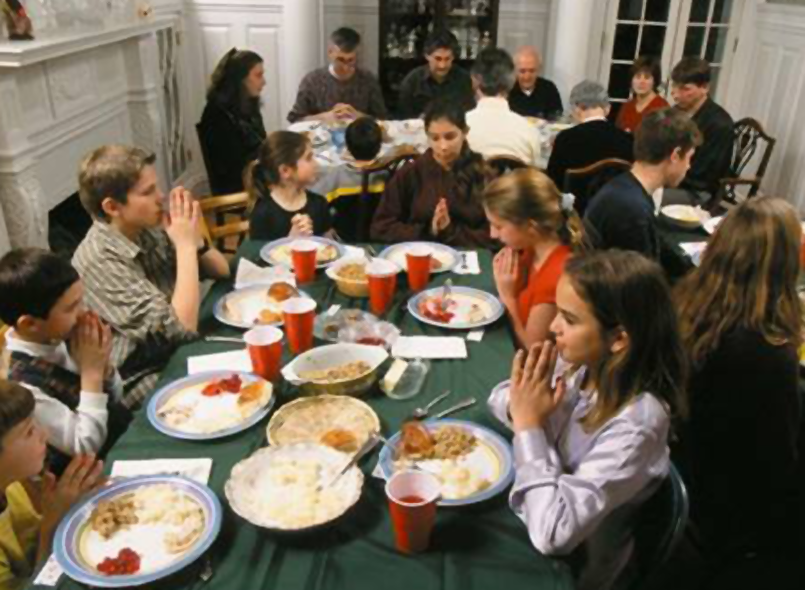
Babinec family cira 2004

As with so many other things that happened over 2020, this Thanksgiving is like no other we’ve ever experienced before.

With baby boomer parents now passed, my own tradition of a large, extended family gathering has not been an obligatory event – but truly a special family celebration that together with my six siblings, we all looked forward to combining our families each year.

Since we’ve chosen this year to celebrate at an individual, rather than combined family level, it’s a much quieter day that finds me reflecting about both Thanksgiving and the bigger picture of how gratitude shapes perspective well beyond the holiday.

Thanksgiving Holiday

We know origins of America’s first thanksgiving celebration trace back to the Pilgrims, but the official holiday wasn’t declared until the depths of the Civil War in 1863. This was a time of struggles with unspeakable tragedy prompted by political divisions which tore the fabric of our country apart.

While my own family has been spared the ravages of Covid-19, we’re sensitive to so many others who’ve suffered personal trauma and loss. And our just completed election has been the most divisive in memory, dividing even to a family level in ways we’ve never seen before.

I find this post from Leslie Danks Burke shares a Civil War era view with meaningful parallels to our situation today.

The Science of Gratitude

Early Roman era philosopher Cicero wrote about gratitude being more than “the greatest virtue,” it is also “the mother of all other virtues.”

Over the centuries since Cicero, many others have looked at the connection between our expressing gratitude and positive outcomes in our lives that may follow. Scholars have taken that to another level by looking to validate this connection through research based approaches such as you’ll find in this white paper on The Science of Gratitude.

A few mentions include:

A lot to chew on for sure. But as I think back to the values my father helped instill in our family, the example he set in showing gratitude throughout his daily life was perhaps one of the most important things that has now been passed on to me and my siblings, and in turn to our next generation.

It will be a special part of our Thanksgiving dinner today to be reminiscing about my Dad’s expressions of gratitude, including through some challenging times for the family.

Writing this post also puts me on a committed path to being more explicit and consistent in my own expression of gratitude through what I do going forward.

Happy Thanksgiving!

Thanks to Patrick Riley for inspiration and sources on the Science of Gratitude


No Internet or Mobile on Big Virtual Day


Everything seemed normal as my day began. Residual winds from Hurricane Eta had subsided, the sun was out and I enjoyed a quiet breakfast overlooking the ocean from our Key West terrace.

This was the big day of the year for non profit Upstate Venture Connect with our annual conference Upstate Unleashed. It’s the only event we do and over the last five years UVC built a strong following of bringing leaders together from throughout the entire Upstate New York region – all for the purpose of sharing experience and strengthening relationships aligned with our mission of connecting startup entrepreneurs to the resources they need to launch and grow companies in the newer industries.

Due to Covid restrictions we moved the entire conference format to virtual. For us, this meant putting lots of energy into not just a line-up of speakers, but getting attendees up to speed on taking advantage of a structured program to request virtual meetings with speakers, top entrepreneurs, investors and startup community leaders.

Our registrations blew past 500 people and almost 400 virtual meetings were scheduled through the conference platform – a huge validation of our strategy to get people connected.

My principal conference role was to moderate a discussion with our keynote speaker Brad Feld about his latest book The Startup Community Way. I was totally jazzed about the opportunity as Brad’s themes in building startup community were very much our inspirational roadmap for so much of what we’ve done this last decade in building UVC’s network across the region to now number more than 16,000 people.

In addition to my speaking with Brad and taking in the other conference sessions, I also accepted invites from 10 conference attendees to have a virtual one on one meetings. So this was to be full day of virtual meetings I was really looking forward to.

No Internet No Phone

As I began powering up shortly after 8am, I lost internet service and while starting to troubleshoot my home network, also realized I had no mobile signal. After checking multiple devices on both Verizon and AT&T mobile services, the realization of being cut off on the big day was sinking in fast.

Having no non internet radio available in the house, the next move was to the car where, oddly, only a single radio station was on air. The announcer confirmed all of Key West was cut off from both internet and mobile service but had no information on the cause or expected restoration.

While I knew the conference would still go on without me, I hated the idea of so many people waiting for me and not even knowing that I was cut off from being able to inform anyone.

So began more than an hour searching around the island for an analog phone line – starting with a couple of businesses I had relationships with then scouring shopping and high foot traffic areas for a pay phone.

Have you noticed that pay phones are just about non existent these days?

As I was wrapping up that fruitless search, I actually found one that looked totally intact. As I rushed over to grab it, a deeply tanned and wrinkled older woman sitting a few feet away blew some smoke at me and said “Sonny, that phone hasn’t worked in 5 years now. Though it’s been gettin lots of attention this last hour!”

She followed up with “You know you’re in Key West now. We don’t worry about such things here.”

Search For Connectivity

So back to the car where I hear on the radio that the cause for disruption was a garbage truck hitting a utility pole on the island of Islamorada, 86 miles north of Key West.

With the announcer indicating telecom or internet service was not expected to be restored till 3pm, my next move was to start driving North up Highway One, figuring at some point I would pick up a cell signal.

It took about an hour and as soon as I got a signal was able to send out some texts to the UVC team and a couple of my missed meeting appointments.

I was able to get into the speaker’s green room and chatted with Brad Feld, but decided my signal strength was not stable enough to risk a disrupted session with me moderating.

Fortunately, our advance coordination the UVC team included a Plan B with UVC CEO Nasir Ali fully equipped to step in as an alternate moderator as we reviewed the interview script the day before.

Nasir did a great job and the session unfolded without any sign of my drama behind the scenes. A credit not to just his moderating, but also UVC COO Kathryn Cartini’s capable hands in orchestrating a seamless production effort.

By the time I returned back to Key West, internet service was restored and I was able to complete 5 of my scheduled one on one meetings. I truly missed not being able to converse with Brad at such a penultimate event for UVC. But overall, very pleased on how it worked out as a solid team effort and high impact virtual event for the UVC community.

And yes, that interaction at the pay phone did bring back that realization I was letting the urgency of the moment cause me to lose sight of our mantra here to be “Living on Key West Time


Why Government Job-Growth Initiatives Fail to Produce Results

The following is adapted from More Good Jobs.

When a city struggles to create jobs, citizens tend to turn to the government to fix the problem. Politicians then attempt to allocate tax dollars for economic development or pass laws and regulations with the intent of stimulating job growth. However, as voters and taxpayers, we have to be asking – how often do these initiatives work out?

Not as often as they should. While many, if not most, elected officials are well-intentioned and truly want to do what they can to help stimulate job growth, the traditional paths fail to create results promised when initial announcements are made. 

When we look at past examples of government initiatives and break down the go-to methods of economic growth, it becomes clear that not only do these approaches fall short, but the government might be the wrong entity to stimulate the economy entirely. 

The Problem with Government Initiatives 

First, let’s look at the traditional path the government takes to stimulate job growth: tax-dollar allocation and building properties. 

There’s a core problem we see on both of these paths: the common belief that it is possible to create new jobs from the top down. Politicians tend to see job growth as something predictable and under their control, so we often encounter what I’ll refer to as the Field of Dreams mentality, a nod to the 1989 baseball film starring Kevin Costner. Think, “If we build it—a factory, office building, etc.—the jobs will come.” 

At an abstract level, this sounds completely logical. The problem is that it doesn’t work in reality. Couple the “build it and they will come” belief with the short-term focus politicians have in order to impress voters before the next election cycle, and you have a recipe for a lot of impressive-seeming actions without substantial results.

Politicians approach the problem from this angle because that’s what they’ve done for the last fifty years, and it fits the mold of top-down behaviors that look good in a press release. However, they’re trying to solve today’s problem with an old set of tools.

A History of Failed Projects

You don’t have to look far to find examples of failed government job creation projects. One notable instance in recent years was the New York State Film Hub based in Syracuse. 

In 2014, Governor Andrew Cuomo announced with great fanfare that the $15 million in taxpayer funds being invested to construct a new facility would create more than 350 high-tech jobs by having a university-operated hub blend cutting edge nano-technology with film production. “Hollywood comes to Onondaga County,” Cuomo said. 

Yet, three years after opening, the gleaming 52,000 square foot building sat virtually empty, having been used for a few short projects, and never coming close to living up to the Governor’s hype.

In 2018, after failing to secure commercial tenants or traction with film projects, the state transferred title to the facility to Onondaga County for $1, effectively writing off the $15 million taxpayer investment in the ill-conceived belief that the government can create businesses and jobs by funding construction of a building – much less the larger film industry subsidy issue which corporate subsidy experts roundly criticize. “Every state analysis I’ve ever seen finds that taxpayers get back only dimes on the dollar from film production tax credits,” says Greg LeRoy of the D.C.-based corporate subsidy watchdog Good Jobs First.

Not only did the film hub project fail to create jobs, but it also showed how the cozy relationships between politicians and property developers have the potential for corruption to creep in. In this case, the film hub developer was the governor’s largest campaign contributor at the time and also the sole firm to submit a bid on the $15 million project. 

A More Effective Way to Create Jobs

Patterns of “build it and they will come” and tax-dollar spending are not unique to New York State. They are repeated all over the country with similar results. 

Politicians allocate taxpayer dollars to build a building in a heartbeat, but that effort does nothing to actually create jobs beyond the construction phase, nor does it have any impact on accelerating the launch of new startup companies. 

What does work?

Despite the poor record of tax-and-construction projects, politicians need not be the enemy when it comes to creating good jobs. When they take the long-term view and understand the needs of entrepreneurs, public officials can be strong allies. 

Most of them got into politics because they truly care about helping people, and if entrepreneurs like you help them see a better path to serve the community, some will get on board in ways that support job-growth ambition. 

Most importantly, with or without politicians’ help, job growth and change needs to come from the bottom-up, not from the top-down. Entrepreneurs understand far better than politicians what creates jobs. Therefore, we can use time and resources to most efficiently change our local economies. 


For more insights on how to transform local economies toward job growth in newer industries, you can find More Good Jobs on Amazon.


Martin Babinec founded NYSE-listed TriNet, a Silicon Valley cloud-based HR service, where he served as CEO for the company’s first twenty years. Relocating to his hometown of Little Falls, New York, he founded nonprofit Upstate Venture Connect, StartFast Ventures, and UpVentures Capital, all of which help grow, support, and invest in transforming Upstate New York’s economy toward job growth in the newer industries. As an independent candidate for New York’s 22nd Congressional District in 2016, Babinec also founded the Upstate Jobs Party (UJP) to influence political discourse on better solutions to grow jobs and reverse regional population decline.